No products in the cart.

Introduction
The smartphone market is constantly evolving, with every new launch promising improved performance, better design, and more innovative features. Vivo, one of the leading brands in the global smartphone industry, has built its reputation on stylish designs, powerful cameras, and reliable performance. Its V-series is especially popular among users who want a balance of premium features without paying flagship prices. With the recent releases of the Vivo V40, Vivo V50, and Vivo V60 series, many buyers are wondering which model is the best choice for their needs. Each device brings unique strengths, so understanding the differences can help you make the right decision.
Vivo V40 – A Stylish Performer
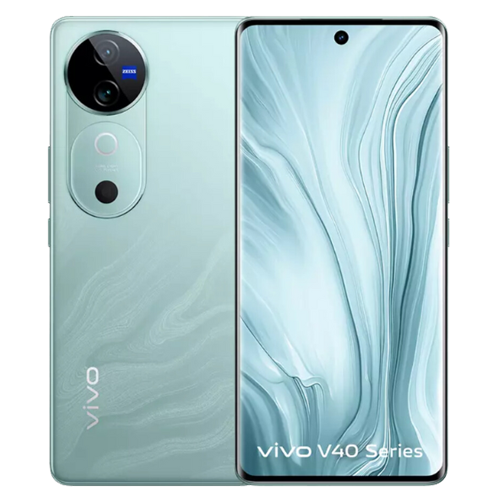
The Vivo V40 was launched as a premium mid-range smartphone, offering an elegant design with a curved AMOLED display and a sharp 1.5K resolution. The phone quickly became popular among users who wanted a sleek device with a vivid screen for movies, social media, and gaming. Powered by the Snapdragon 7 Gen 3 chipset, the V40 handles multitasking and daily usage with ease. Its dual 50 MP ZEISS-tuned cameras provide crisp images, and the large 5,500 mAh battery with 80 W charging ensures reliable power throughout the day. However, compared to its successors, the V40 feels more like a refined version of older models rather than a major upgrade. While it delivers excellent value for its price, users looking for longevity, future-proof software, and more advanced features may want to consider newer series.
Vivo V50 – An Evolution with Better Battery and Software
The Vivo V50 took everything that worked well in the V40 and gave it an upgrade. It retains the same Snapdragon 7 Gen 3 processor but boosts overall performance with up to 12 GB of RAM. One of its standout features is the massive 6,000 mAh battery combined with faster 90 W charging, which makes it one of the most reliable phones in the series for heavy users. While the display resolution drops slightly to FHD+ compared to the V40’s sharper 1.5K, it still looks vivid and smooth with a 120 Hz refresh rate. Another key improvement is the software—Vivo V50 ships with Android 15 (Funtouch OS 15), promising better optimization and longer update support. The ZEISS camera system continues to deliver reliable results, particularly in daylight, and the phone’s durability is enhanced with stronger glass protection. For users who want a well-rounded device with improved endurance, the V50 is an excellent pick.
Vivo V60 – A Big Leap Forward
The Vivo V60 series represents a major step up compared to the V40 and V50. Equipped with the Snapdragon 7 Gen 4 processor, it offers noticeable performance gains in gaming, multitasking, and power efficiency. But what truly sets it apart is the upgraded camera system. Instead of a dual setup, the V60 features a triple-lens arrangement that includes a 50 MP periscope telephoto camera with 3x optical zoom, allowing users to capture detailed shots at a distance. This makes the Vivo V60 series especially appealing to photography enthusiasts. The display remains stunning with 1.5K resolution and high brightness levels, ensuring great visibility outdoors. Battery life is another highlight the V60 packs a huge 6,500 mAh battery, the largest in the V-series so far, paired with 90 W fast charging. On top of this, Vivo V60 series has added AI-powered features such as Google Gemini integration, smart call assistant, and advanced personalization options, which elevate the overall user experience.
Comparing the Three Models
When comparing these three smartphones, the V40 serves as a solid entry point with its sharp display and stylish design, but it lacks some of the advanced features found in later models. The V50 improves on the formula with a bigger battery, faster charging, and updated software, making it a more reliable everyday device. The Vivo V60 series, however, is where Vivo has made the most progress, offering stronger performance, better cameras, AI features, and unmatched battery life. If budget is a major factor, the V40 or V50 may be more practical, but for those seeking the latest technology and premium features, the V60 is the clear winner.
Which One Should You Choose?
- Choose Vivo V40 if you want a stylish phone with a sharp display at a slightly lower price point.
- Choose Vivo V50 if battery life and longer software support are your top priorities.
- Choose Vivo V60 series if you want cutting-edge performance, the best camera system, AI features, and the most future-proof option.
Conclusion
The Vivo V40, V50, and V60 series all deliver on Vivo’s promise of style, performance, and camera excellence. The V40 remains a dependable mid-ranger, the V50 balances endurance and reliability, and the Vivo V60 series pushes the boundaries with advanced features and technology. Ultimately, the best choice depends on your needs and budget. For casual users, the V40 is more than enough. For power users who value battery and smooth performance, the V50 is ideal. But if you want the very best that Vivo offers right now, the V60 series is the standout choice.
Frequently Asked Questions (FAQs)
1. Which Vivo series has the best camera?
The Vivo V60 series has the best camera setup, thanks to its triple-lens system with a periscope telephoto lens, offering 3x optical zoom and ZEISS enhancements.
2. Is there a big performance difference between Vivo V50 and V60?
Yes, the V60 uses the newer Snapdragon 7 Gen 4, which delivers improved gaming, multitasking, and efficiency compared to the V50’s Snapdragon 7 Gen 3.
3. Which Vivo phone has the biggest battery?
The Vivo V60 comes with a 6,500 mAh battery, the largest among the three, followed by the V50’s 6,000 mAh and the V40’s 5,500 mAh.
4. Do all three models support fast charging?
Yes. The V40 supports 80 W fast charging, while both the V50 and V60 support 90 W, giving them a slight edge in charging speed.
5. Which Vivo model is the most future-proof?
The Vivo V60 is the most future-proof, offering AI features, the latest chipset, superior cameras, and the longest-lasting battery, making it the best long-term choice.